
Before your appointment
Preparing for Laser Hair Removal: Your First-Session Checklist
What to organize before your first appointment, what to stop doing, and when to call the clinic instead of guessing.
If you already have a laser hair removal appointment booked, your biggest question may not be which machine is best. It may be much simpler: should I shave, can I wax, what if I have a tan, and which skin products do I stop? This preparation guide follows the patient journey. For treatment suitability, session planning and branch information, you can also explore Magenta Clinique's laser hair removal guides for Maadi and New Cairo.
Key takeaways
- Do not wax, pluck or use electrolysis shortly before laser treatment; the follicle needs a target.
- A recent tan, sunburn or self-tanner can change your risk and may mean postponing.
- Shaving timing is usually advised by the clinic; do not shave broken or irritated skin without checking.
- Disclose skin conditions, recent medicines, scars and cold sores during the consultation.
- Follow your own clinic's instructions instead of a rigid internet countdown.
Article contents
Before You Book: Check That Laser Is Appropriate
Laser hair reduction works by targeting pigment associated with a hair follicle. Hair color and thickness, background skin tone, treatment site and the laser used all matter. The same generic settings are not right for every person. Very light, white, red or grey hair may respond poorly because there is less suitable pigment for a laser to target.
A laser consultation should ask about the area you want treated, medical history, medications, recent tanning and previous reactions. If you have darker skin, ask how the clinician chooses the device and settings for your particular tone. For a deeper discussion of this decision, read the dedicated guide on laser treatment for brown and darker skin.
Several Weeks Before: Protect the Skin and Hair Follicle
Mayo Clinic advises avoiding waxing, plucking and electrolysis for at least four weeks before a laser hair removal session; these methods remove the follicular hair that the laser needs to target. You can usually use a razor instead, but follow instructions for your specific area.
Avoid tanning beds and sunless tanning products, and protect exposed skin from strong sun. If you are sunburned or have a recent tan, tell the clinic. Laser use on recently tanned skin may carry a higher risk of burns or dark or light patches. The safest plan may be to reschedule rather than cover the tan or change equipment at the last minute.
Tell your clinician if you develop a rash, bacterial skin infection, cold sore or irritated patch at the planned treatment site. Also mention a tendency toward keloids or problems healing. Do not stop prescription medication on the advice of a website; the clinician should review relevant drugs and coordinate changes, when appropriate, with the prescriber.
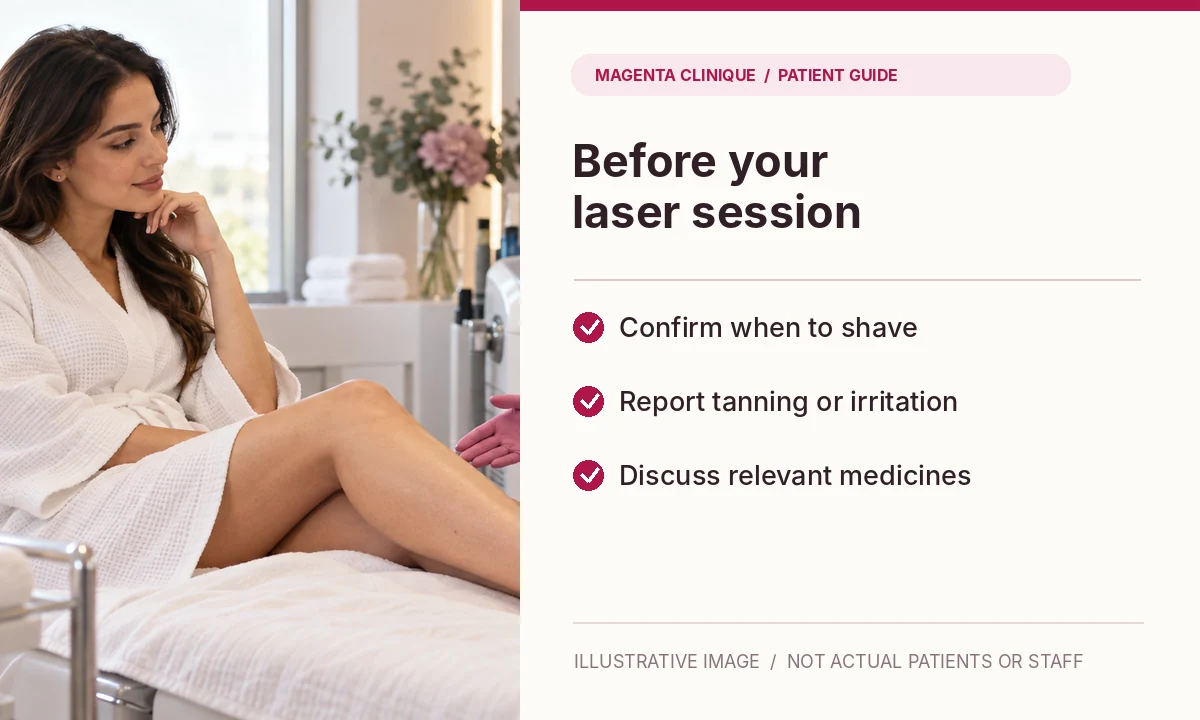
The Day Before: Shaving, Products and Skin Condition
Shaving the treatment area the day before is common guidance in Mayo Clinic's patient information. It leaves the hair follicle in place while removing much of the hair above the skin surface. The precise timing can differ by body area and clinical protocol, so confirm it when you book.
Use a clean razor gently, avoiding cuts and repeated passes over inflamed skin. Do not try a new scrub, strong acid or retinoid immediately before a session. Ask the team about your usual skin care and topical prescriptions. For underarms and other sensitive areas, also ask whether deodorant, perfume, lotion or makeup should be avoided on appointment day.
- Confirm the area booked and whether the clinic expects it to be shaved.
- Photograph or list the skin-care products and medicines you use if you are unsure what to declare.
- Tell the clinic about a tan, burn, rash, recent peel or new irritation.
- Arrive with comfortable clothing and follow any instructions about keeping the area free of product.
Appointment Day: What a Well-Planned Session Looks Like
The clinician should confirm the treatment region, check skin and hair characteristics and discuss expected hair reduction, discomfort and risks. Laser hair removal usually requires a series of sessions because different hairs are in different growth phases. It is long-term hair reduction, not a promise that every hair will disappear permanently.
Appropriate eye protection is essential. Some systems use a cooling tip, spray or gel to improve comfort and help protect the skin. Ask what a normal sensation should feel like, and report unexpected severe pain or burning immediately rather than trying to endure it.
- 1
Review
Confirm the site, your medical history, medication changes and any recent sun exposure.
- 2
Protect
Use proper protective eyewear and review expected sensations and cooling.
- 3
Treat
Ask the provider to explain the plan, especially if your skin tone or previous reaction makes settings important.
- 4
Leave with written aftercare
Know which products to use, how to avoid sun, and what symptoms require a call.
After Treatment: Do Not Confuse Shedding With Regrowth
Redness, mild swelling around follicles and a temporary warm feeling can follow laser hair removal. Hair may appear to grow before treated hairs are shed. Do not pull the hair out to speed this along; follow the clinician's guidance on washing, shaving and gentle care.
Avoid unprotected sun exposure and use the sun protection recommended for your skin. Blistering, severe pain, growing dark patches or signs of infection need medical review. If the skin reaction is more than mild, the team should assess it before the next appointment.
Five Useful Questions to Ask Before Paying for a Package
A first-time patient should receive an individualized plan rather than only a per-session price. The number of visits and a provider's experience with your skin tone are part of that plan.
- Who assesses my skin and performs the procedure?
- Which type of laser is proposed for my particular hair and skin?
- How many sessions might I need, and what does the quote include?
- When do I shave, and what happens if I have recently tanned?
- What is the follow-up plan for burns, pigment changes or persistent irritation?
Frequently asked questions
Should I shave before my laser hair removal appointment?
Mayo Clinic lists shaving the day before as common preparation. Follow your own clinic's advice for the body area and contact them if shaving causes irritation.
Can I wax before a laser session?
Waxing removes hair at the follicle and can interfere with laser targeting. Mayo Clinic advises avoiding it, as well as plucking and electrolysis, for at least four weeks before treatment.
Can I have laser treatment with a tan?
Recent tanning increases concern about burns and pigment changes. Inform your clinician before treatment; the appointment may need to be delayed.
Do I need special laser-protection cream?
Do not rely on an unverified “laser protector” product. Ask the treating clinic about its cooling method, device, skin evaluation and approved aftercare. Sun protection is especially important.
Sources & evidence
The clinical information below uses published guidance and literature. Evidence strength varies by device and indication; these references do not replace an individual medical assessment.
Ready for a Skin-Tone-Aware Laser Assessment?
Ask which preparation steps apply to your treatment area, skin tone and medicines before booking a session or package.
Ask Magenta CliniqueView New Cairo ClinicContinue with a focused guide
Published 2026-10-17. Prepared by the Magenta Clinique Editorial Team for patient education. This information is not a diagnosis or a treatment recommendation; your clinician's personalized instructions take priority.