
Excessive sweating
Excessive Underarm Sweating: When Might Botox Be an Option?
Sweating that disrupts everyday life deserves a diagnosis and a plan, not an automatic cosmetic injection.
A little sweat during a Cairo summer is normal. Underarm sweat that soaks through clothes while you are cool and at rest can be a different problem: hyperhidrosis. Many people can start with simpler measures; selected patients may benefit from medical treatment, including botulinum toxin injections. This article focuses on the decision pathway for sweating. It does not claim that every patient needs Botox or that Magenta Clinique has confirmed appointments for every hyperhidrosis procedure.
Key takeaways
- Excessive sweating can be primary or related to medication or a health condition; diagnosis matters.
- Prescription-strength antiperspirants and other measures are often discussed before injections.
- Botulinum toxin may temporarily reduce underarm sweat in suitable patients; it is not a permanent cure.
- Treatment area, product approval, side effects and provider experience should be reviewed before booking.
- Sudden generalized sweating, new night sweats or sweating with concerning systemic symptoms needs medical evaluation.
Article contents
When Is Sweating More Than an Ordinary Response to Heat?
The aim is not to stop healthy body cooling. Hyperhidrosis is excessive sweating that goes beyond what would usually be expected for the temperature or activity and can interfere with clothing, social activities or work. It often affects the underarms, palms, feet or face.
A dermatologist should distinguish primary hyperhidrosis from secondary sweating caused by another condition or a medicine. If sweating has started suddenly, occurs all over the body, appears at night or is accompanied by other illness symptoms, a medical assessment is important before considering a cosmetic-style injection.
Mayo Clinic advises urgent attention if heavy sweating occurs with serious symptoms such as chest pain or faintness. In that situation, do not book an aesthetic consultation first.
What Should You Try or Discuss Before Botox?
Underarm antiperspirants differ from deodorants. Antiperspirants reduce sweat production; deodorants are mainly designed to address odor. A clinician may suggest a prescription-strength option, review how and when you apply it, and assess whether skin irritation is interfering with regular use.
Other medical treatments can be considered according to the type and location of sweating, medical history and local availability. Ask for a diagnosis and discussion of alternatives rather than selecting Botox based solely on a social-media before-and-after.
If simple measures are effective, an injectable treatment may not be necessary. If sweat continues to disrupt your daily life despite appropriate care, a dermatologist can explain what further options might suit you.
| Approach | What it aims to do | What to ask |
|---|---|---|
| Antiperspirant | Reduce sweat at the skin surface. | Is a clinical-strength option appropriate, and how can irritation be minimized? |
| Medical review | Identify triggers and possible secondary causes. | Does my symptom pattern need other examination or testing? |
| Botulinum toxin injection | Temporarily reduce sweat signaling in a treated area. | Is my case suitable, is this service available and what are the risks, duration and cost? |
| Other specialist treatments | Address persistent sweating using other medical methods. | Which alternatives are actually offered and suitable for my location of sweating? |
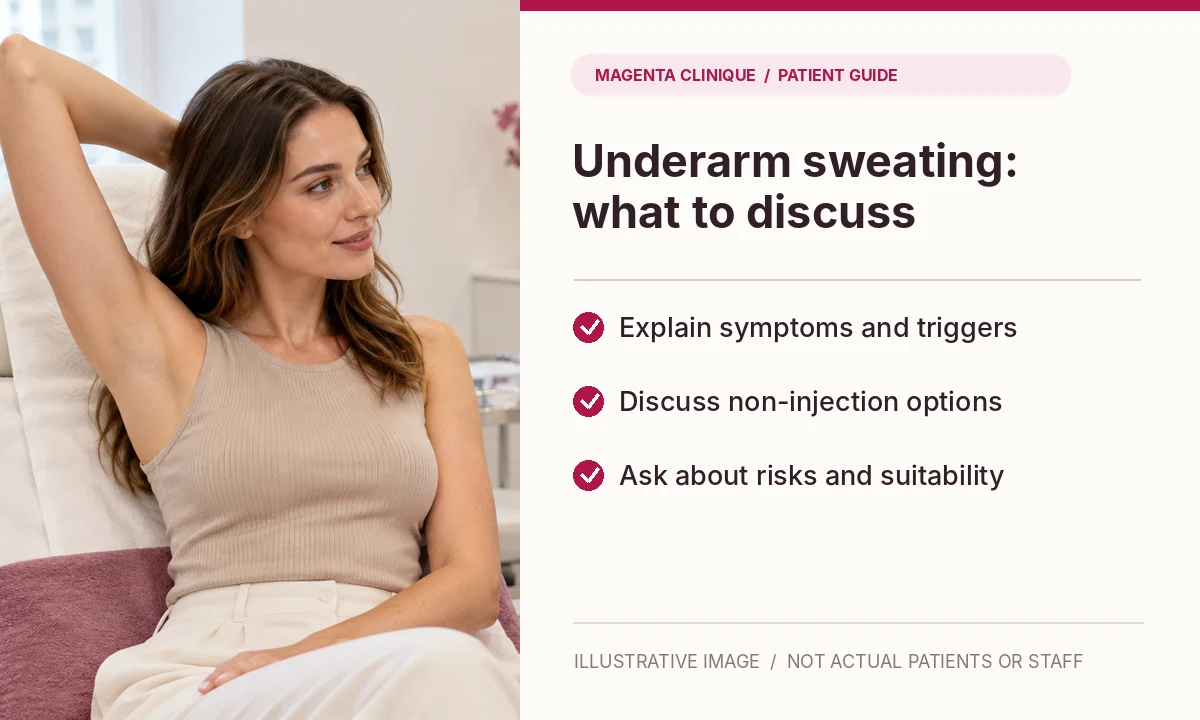
How Do Underarm Botox Injections Work?
Botulinum toxin can temporarily interrupt nerve signaling to local sweat glands. In an underarm procedure, tiny injections are placed into the skin across the selected treatment area. This is different from injecting facial muscles for wrinkle treatment and should have its own assessment and consent discussion.
The American Academy of Dermatology reports that many patients notice a reduction in underarm sweating in the first 7-10 days after treatment, although individual results vary. Relief is temporary and repeat treatment may be discussed when sweating returns. It does not permanently remove sweat glands or address an underlying cause of generalized sweating.
US approvals for certain botulinum toxin products include severe primary axillary hyperhidrosis when topical treatment has not worked adequately. That does not establish approval for every body site, every brand or the same regulatory status in Egypt. The specific product and service must be verified locally.
Questions to Ask Before Any Sweat-Reduction Injection
A proper consultation should discuss where the sweating occurs, how long it has been present, what has already been tried and whether there are other symptoms. Ask the clinician to review medicines, medical conditions, infections and any relevant neuromuscular problems. Certain drugs or health conditions may affect treatment choice or risk.
Possible adverse effects of botulinum toxin injections include pain, bruising, temporary local weakness and other reactions. Severe systemic effects are rare but can be serious. Ask for clear emergency instructions and the precise product proposed. Do not assume a brand or dose mentioned for cosmetic wrinkles is automatically the right one for hyperhidrosis.
- 1
Describe the pattern
Underarms only or elsewhere? Both sides? During sleep? How long has it been happening?
- 2
Review what you tried
Bring the names of antiperspirants, medicines and any previous medical treatments.
- 3
Confirm suitability and availability
Ask whether your diagnosis fits a medical injection, which product is used and whether the service is currently offered.
- 4
Compare the full plan
Discuss likely temporary benefit, side effects, follow-up, repeat treatment and current pricing.
Symptoms That Should Change the Plan
Sweating that is newly generalized, accompanied by unexpected weight loss, fever, night sweats or other systemic symptoms needs a medical review, not just local sweat suppression. Heavy sweating together with chest pain, faintness or other emergency symptoms calls for urgent care.
If botulinum toxin is given, follow the treating clinician's aftercare instructions. Seek urgent attention if difficulty breathing, swallowing, speaking or widespread weakness develops. Contact the clinician for any concerning reaction at an injection site.
Making the Consultation Useful in Cairo
When contacting Magenta Clinique, describe whether sweating is your main concern or one of several skin concerns. Ask specifically about an underarm hyperhidrosis assessment and which treatment options are available. The broader Botox guides remain the appropriate pages for wrinkle treatment, pricing factors and location-specific details.
A useful response should explain next steps and suitability, not promise a fixed amount of sweat reduction before a qualified clinician has evaluated you.
Frequently asked questions
Does Botox permanently stop underarm sweating?
No. The effect on local sweat signaling is temporary. Your clinician can discuss typical duration, variability and whether repeat treatment is appropriate.
How quickly can underarm Botox reduce sweating?
The American Academy of Dermatology says many patients see less sweating within about 7-10 days, but individual response is variable.
Is underarm Botox the same as facial Botox?
Both may use botulinum toxin, but underarm injections target local sweat signaling in skin rather than facial-muscle movement. The assessment, injection pattern and indication differ.
Does Magenta Clinique currently offer underarm Botox?
Please ask Magenta Clinique directly whether underarm hyperhidrosis injections are currently available, what product would be proposed and whether a consultation is required before booking.
Sources & evidence
The clinical information below uses published guidance and literature. Evidence strength varies by device and indication; these references do not replace an individual medical assessment.
Ask About an Excessive-Sweating Assessment
Describe your symptoms and ask which medical options, products and appointments are currently available. A diagnosis comes before an injection plan.
Ask Magenta CliniqueView New Cairo ClinicContinue with a focused guide
Botox in New Cairo: wrinkle and injectable treatment overview
Explore this topic Related readingBotox in Maadi: doctor-led treatment guide
Explore this topic Related readingBotox safety: side effects and important questions
Explore this topic Related readingNew Cairo clinic: consultation details
Explore this topicPublished 2026-10-17. Prepared by the Magenta Clinique Editorial Team for patient education. This information is not a diagnosis or a treatment recommendation; your clinician's personalized instructions take priority.