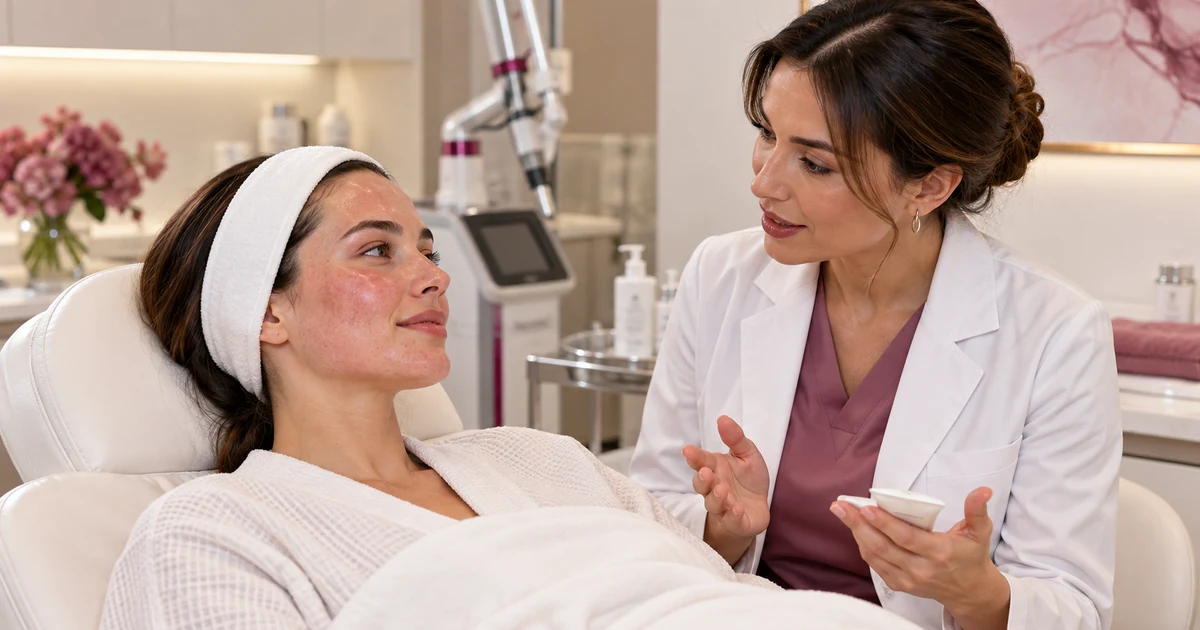
Laser recovery
Fractional CO2 Laser Recovery: What Healing Can Look Like
A practical recovery guide for the days after resurfacing, with realistic variability and clear reasons to contact your clinician.
Before booking fractional CO2 resurfacing, people often ask a practical question: how long before my face can comfortably return to normal life? The answer is not a universal three-day or seven-day promise. Ablative fractional lasers create controlled surface injury, and recovery depends on the treatment settings, area, your skin and the aftercare plan. Here we focus on healing; for how the treatment works and how it is planned at each location, you can explore the clinic's fractional laser guides for Maadi and New Cairo.
Key takeaways
- Fractional CO2 is an ablative laser; recovery is not interchangeable with a gentle non-ablative treatment.
- Visible redness, swelling and peeling can occur, but intensity and duration depend on the exact procedure.
- Follow the specific cleansing, dressing, ointment and sun-protection plan supplied by your treating clinician.
- Do not restart acids, retinoids, scrubs or makeup simply because you want the redness to disappear faster.
- New blisters, spreading redness, increasing pain, fever or possible infection require medical assessment.
Article contents
Start by Confirming Which Laser You Actually Had
“Fractional laser” describes a pattern of treated columns, not a single intensity or a guaranteed recovery window. A fractional ablative CO2 procedure affects the outer layer of skin and promotes remodeling below. A non-ablative fractional procedure creates a different injury pattern and often has shorter visible downtime.
Mayo Clinic describes new skin covering an area after more extensive ablative resurfacing in about 7-10 days, while full healing takes longer. A lower-density fractional treatment may look different, and your own treatment depth, density and location matter. Ask the clinician to explain which of those expectations applies to you rather than using someone else's social-media recovery photo.
The First 48 Hours: Protect the New Skin Barrier
Warmth, swelling, redness and a tight feeling may follow treatment. The skin can become sensitive and may ooze or crust after a more intensive ablative pass. The treating clinic should give you a clear plan for whether to cleanse, use an ointment, keep a dressing in place or return for a check. Do not apply home remedies, fragrance, exfoliants or unfamiliar antiseptics.
If your provider prescribes an antiviral or another medication because of your history and treatment type, use it exactly as instructed. Tell the clinician about cold sores or previous herpes outbreaks before treatment, since resurfacing can reactivate herpes in some people.
The aim during this stage is gentle healing, not rapid exfoliation. Avoid rubbing, picking or peeling away skin. Contact the clinical team if pain is escalating rather than gradually becoming manageable.
- Keep and follow your individualized written cleansing and dressing instructions.
- Use only the ointment, moisturizer or medication approved by your treating clinician.
- Protect treated skin from direct sun, heat and friction as instructed.
- Do not pick or forcibly remove crusts; ask the clinic if your skin looks unexpectedly different.
The Next Days: Redness, Peeling and Return to Daily Life
Some people develop bronzing, flaking or crusting as treated surface cells separate; others mainly notice redness and swelling. Many ablative treatments require several days of visible recovery, and redness can remain after the surface closes. Deeper resurfacing may take substantially longer. You should never be promised one exact timetable without knowing the settings and extent of treatment.
Ask the doctor when you can resume makeup, exercise, swimming, shaving, office visits and your regular skin-care routine. Each of these introduces a different concern, such as heat, friction, infection or an irritating ingredient. The plan should be adjusted if you have a pigmentation-prone skin tone or a history of prolonged post-inflammatory darkening.
If you are planning the treatment around a wedding, photo shoot or major event, discuss a conservative buffer rather than choosing a procedure because it is advertised as “no downtime.”
| Stage | Possible experience | Your question for the clinic |
|---|---|---|
| Initial days | Warmth, swelling, color change, sensitive surface. | How and when should I cleanse, dress and moisturize the area? |
| Surface healing | Peeling, crusting or flaking may occur depending on intensity. | How do I avoid picking, infection and premature product use? |
| After surface closure | Redness or pigmentation may persist even when skin looks intact. | When can I reintroduce sunscreen, makeup, actives and exercise? |
| Follow-up | Texture remodeling is gradual; one photo cannot measure final improvement. | When should my provider reassess healing and results? |
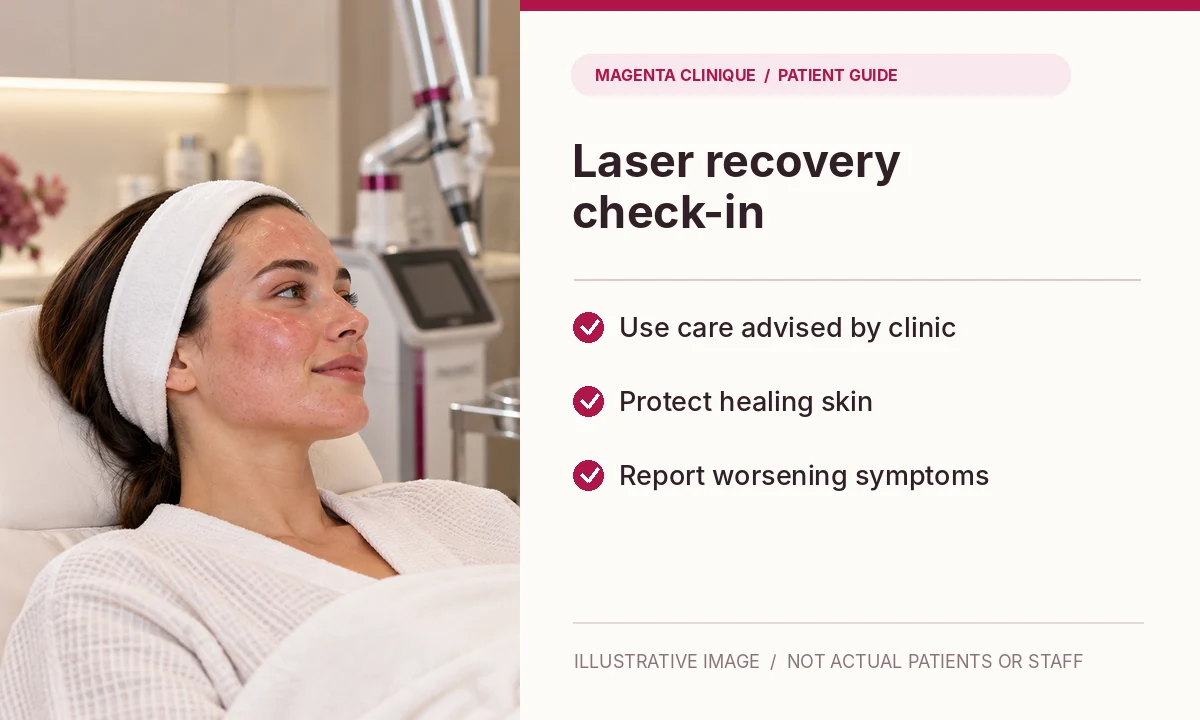
Brown and Olive Skin: Plan Around Pigmentation Risk
After inflammation, some skin types develop post-inflammatory hyperpigmentation, and less commonly hypopigmentation. Mayo Clinic notes that long-term color changes are of particular concern in brown and darker skin. This does not automatically rule out fractional laser; it makes device choice, treatment intensity, pre-treatment assessment and aftercare more important.
Ask about existing melasma, a history of dark marks after acne, and whether an alternative treatment could better fit the problem. The same energy setting should not be promoted as universally ideal for both light and richly pigmented skin.
Sun protection remains important after treatment. Use the products and timing approved by your provider while the skin heals; later, a broad-spectrum SPF 30+ product is a common long-term recommendation.
When Recovery May Not Be Normal
No online calendar can diagnose a complication. Worsening pain after an initial improvement, expanding redness, pus, a strong odor, fever or unexpected blisters need prompt clinical review. A new cold sore-like eruption can also matter after facial resurfacing.
If your skin is increasingly dark or unusually pale, contact the clinic rather than starting strong bleaching or peeling products. Clinicians may need to identify whether the change is part of healing, post-inflammatory pigmentation or another issue.
Questions to Ask Before Scheduling Time Off Work
Your ability to work or attend an event may depend more on visible redness and the specific treatment intensity than on a headline recovery number. Use these questions at your consultation.
- 1
Identify the procedure
Is it fractional CO2, another ablative laser, or a non-ablative fractional treatment? What density or intensity is planned?
- 2
Discuss your skin history
Mention pigmentation, melasma, active acne, recent tanning, cold sores and previous scarring.
- 3
Get the home-care plan
Ask exactly what cleanser, ointment or dressing to use and who to contact after hours.
- 4
Agree on review timing
Know when a medical review is expected and how to report possible infection or pigment change.
Frequently asked questions
How long does fractional CO2 laser redness last?
Redness is highly dependent on treatment intensity, skin tone and healing. It may continue after the surface closes. Ask your clinician for a range based on the settings they plan to use.
Can I use retinol after fractional laser?
Not until the treating team says your skin barrier has recovered enough. Strong actives can irritate freshly treated skin.
When can I wear makeup after fractional CO2?
Makeup timing depends on whether and how the skin surface has healed. Follow your clinician's instructions rather than relying on a fixed number of days online.
What if I get dark patches after a laser treatment?
Pigment changes should be assessed, especially in pigmentation-prone skin. Do not self-treat with bleaching products or strong peels on healing skin.
Sources & evidence
The clinical information below uses published guidance and literature. Evidence strength varies by device and indication; these references do not replace an individual medical assessment.
Discuss Your Recovery Before You Choose a Laser
Ask the clinic what procedure is proposed for your concern and how recovery, sun protection and follow-up will be managed.
Ask Magenta CliniqueView New Cairo ClinicContinue with a focused guide
Published 2026-10-17. Prepared by the Magenta Clinique Editorial Team for patient education. This information is not a diagnosis or a treatment recommendation; your clinician's personalized instructions take priority.