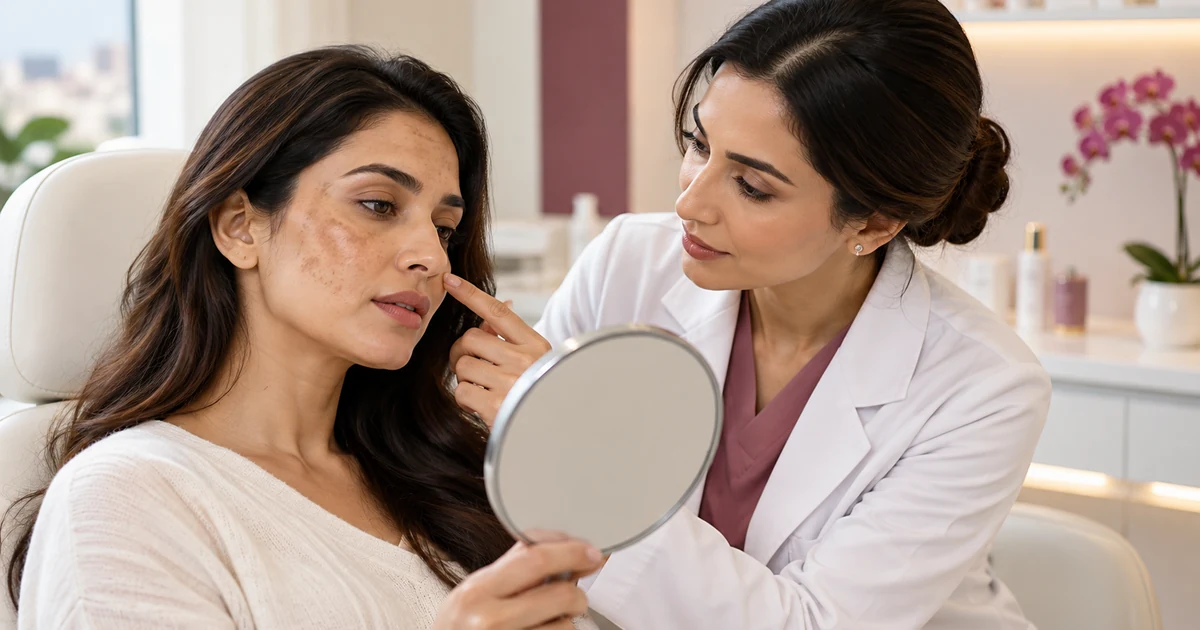
Pigmentation assessment
Melasma or Dark Spots? Why the Diagnosis Changes Treatment
Not every brown patch needs a whitening treatment or a laser. Start by understanding what caused the pigment.
Two people can have dark patches on their faces and need very different plans. Melasma, sun-related spots and post-inflammatory marks left after acne can look similar at a glance, yet their triggers, recurrence risks and response to treatment differ. If you have olive or brown skin, the wrong aggressive procedure can make pigmentation worse. This guide is about distinguishing the question before choosing a product or laser; it is not a remote diagnosis.
Key takeaways
- Melasma often appears as more diffuse facial patches; post-inflammatory marks follow inflammation such as acne.
- An examination matters: persistent, changing or unusual marks should not automatically be labeled melasma.
- Visible light can worsen melasma; the AAD recommends tinted broad-spectrum SPF 30+ sunscreen containing iron oxides.
- Prescription topicals and sun protection commonly form the foundation of melasma care.
- Lasers or peels require careful selection because irritation and heat can aggravate some pigmentation problems.
Article contents
Melasma vs Post-Acne Marks: What Is Different?
Melasma often causes broader patches of increased pigmentation on areas such as the cheeks, forehead or upper lip. Hormonal influences and light exposure can play a role. Post-inflammatory hyperpigmentation (PIH) is pigment left behind after the skin has been inflamed, for example by acne, picking, eczema or an irritating product.
Sun damage, freckles, medication-related pigmentation and other skin disorders can also cause dark areas. A dermatologist should assess an uncertain diagnosis, particularly if a mark is new, changing, irregular, symptomatic or not following a familiar pattern. Photographs and internet comparisons cannot replace a skin examination.
| Clue | Melasma may involve | Post-inflammatory pigmentation may involve |
|---|---|---|
| Where it appears | Patches on central facial areas, sometimes in a broadly symmetrical distribution. | Marks corresponding to previous acne, irritation or skin injury. |
| Trigger history | Sun or visible light; sometimes hormonal change or medication-related influences. | An inflammatory event, rubbing, picking or a reaction to a product. |
| Why it may recur | Continued light exposure and personal triggers can reactivate patches. | New acne or irritation can leave fresh marks. |
| Clinical priority | Identify triggers and plan sun/visible-light protection plus appropriate therapy. | Treat the ongoing cause of inflammation and protect against new dark marks. |
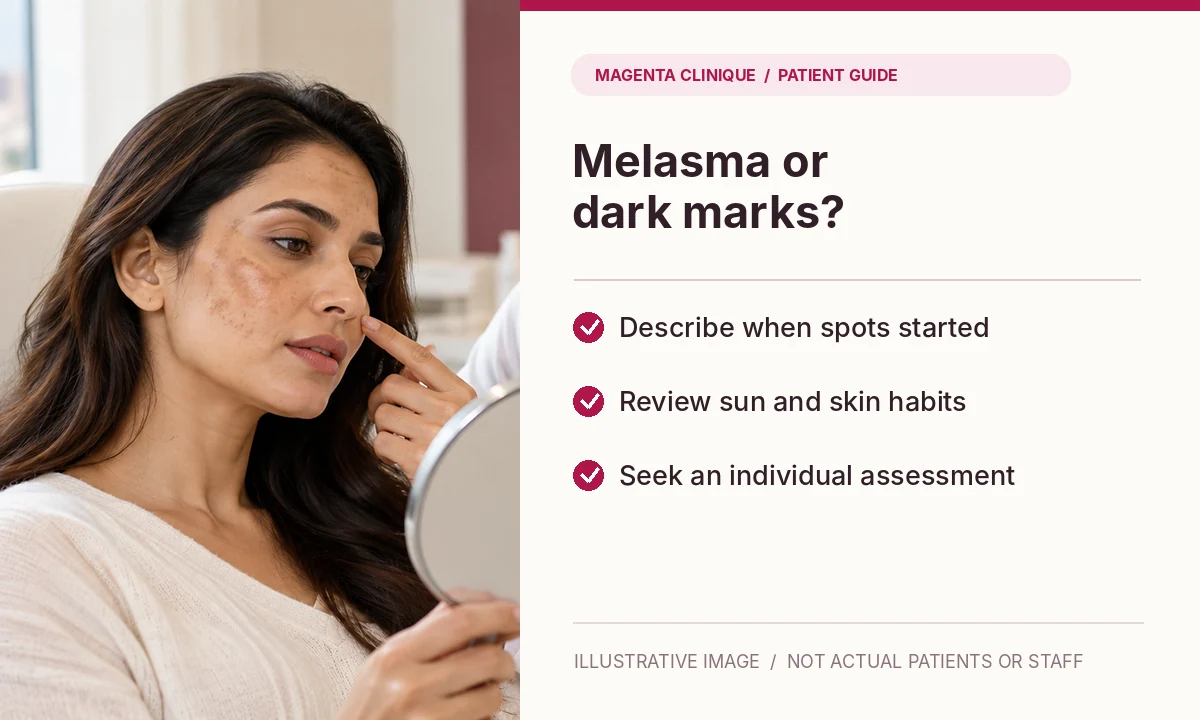
Why Sunscreen Is Part of Treatment, Not an Optional Extra
Sunlight can trigger pigment production. The American Academy of Dermatology also highlights visible light as a contributor to melasma, particularly in darker skin tones. A tinted, broad-spectrum sunscreen with SPF 30 or higher and iron oxides can help address both UV and visible-light exposure. A protective hat and seeking shade matter too.
Patients sometimes spend heavily on peels while using sun protection only occasionally. That can undermine the plan, because repeated light exposure may keep the pigmentation active. Ask your clinician for a sunscreen texture and tint you can realistically use every day, and how often to reapply according to your activities.
If a “brightening” product stings or burns, do not assume that means it is working. Irritation itself may cause more pigment. Gentle, fragrance-free skin care is often a safer foundation while your diagnosis and treatment plan are being clarified.
Topical Treatment, Peels or Laser: What Should Come First?
For melasma, clinicians frequently begin with sun protection and prescription or clinician-directed topical treatment. Options may include hydroquinone-based regimens, retinoid-containing combinations or alternatives such as azelaic acid. Some are not suitable during pregnancy or for certain skin conditions; a dermatologist must choose and supervise the plan rather than a patient copying a regimen from a beauty video.
Procedures can sometimes help selected patients, but a laser is not automatically the fastest or safest first step. AAD guidance explains that lasers and light treatments may be added for some patients already using appropriate skin protection and medication. Overly aggressive treatment can worsen pigmentation or create new marks, especially in brown and olive skin.
If acne is still active, preventing new inflammation is part of treating the dark marks left behind. Similarly, someone whose main concern is pitted acne scars needs a different assessment from someone whose acne has healed but left only flat pigment.
- 1
Confirm the diagnosis
Describe the original timing of the marks and request examination if the cause is uncertain.
- 2
Control the trigger
Address active acne, irritating skin care, UV/visible-light exposure or relevant medical factors.
- 3
Choose treatment for your skin
Discuss topicals first when appropriate, including prescription risks and pregnancy considerations.
- 4
Consider procedures carefully
Ask why a peel or laser is suitable for your skin tone and pigment pattern, and how complications would be managed.
Pregnancy, Hormones and Sensitive Skin: Important Information to Share
Melasma can appear or worsen during hormonal changes, including pregnancy. Tell the clinician if you are pregnant, trying to conceive or breastfeeding; this affects which active ingredients and procedures may be appropriate. Do not use prescription-lightening combinations, retinoids or oral treatments without personalized medical guidance.
If the pigmentation began after a cosmetic treatment, strong skin-care product or repeated acne breakouts, bring that history as well. The best plan may be to calm inflammation and protect the skin rather than add another energy-based procedure straight away.
A Better Pigmentation Consultation in Cairo
You do not need to name the procedure you want before contacting a dermatologist. It is more useful to describe where the patches appeared, whether you had acne or irritation first, what products you use and whether sunlight or hormonal changes seem to affect them.
To explore the clinic's dermatology services and appointment locations, you can also read the skin-care guides for New Cairo and Maadi.
- When did the marks appear? Did they follow acne, a treatment, pregnancy or sun exposure?
- Are the patches flat or textured? Are they changing or causing symptoms?
- What current products, medicines or prescription creams are you using?
- What should the home-care plan and realistic review timetable be?
- Why is the proposed procedure safer than alternative approaches for your skin tone?
Frequently asked questions
How do I know if a dark patch is melasma or an acne mark?
Distribution, history and triggers can offer clues, but are not a reliable home diagnosis. A dermatologist can examine uncertain or changing pigmentation.
What sunscreen is recommended for melasma?
The American Academy of Dermatology recommends broad-spectrum SPF 30+ protection; tinted formulas containing iron oxides can also help protect against visible light.
Will laser remove melasma permanently?
No permanent result should be promised. Melasma often recurs and some procedures can aggravate pigmentation. A dermatologist should discuss suitable options and ongoing protection.
Can I treat melasma while pregnant?
Pregnancy changes which treatments are suitable. Discuss the diagnosis and safe skin care with your clinician; do not start retinoids or prescription lightening medications without medical advice.
Sources & evidence
The clinical information below uses published guidance and literature. Evidence strength varies by device and indication; these references do not replace an individual medical assessment.
Not Sure What Is Causing Your Dark Spots?
Start with a skin assessment rather than choosing a laser or strong bleaching product before the diagnosis is clear.
Ask Magenta CliniqueView New Cairo ClinicContinue with a focused guide
Skin and dermatology consultations in New Cairo
Explore this topic Related readingSkin clinic in Maadi: services and consultation
Explore this topic Related readingFractional laser healing and pigmentation caution
Explore this topic Related readingAcne scar care versus pigmentation
Explore this topicPublished 2026-10-17. Prepared by the Magenta Clinique Editorial Team for patient education. This information is not a diagnosis or a treatment recommendation; your clinician's personalized instructions take priority.